What is WebAR and How It Transforms E-Commerce
What is Augmented Reality?
In our previous article on augmented reality, we highlighted that it refers to a variation of virtual environments, or in other words, virtual reality. This technology allows users to interact with virtual objects without disconnecting them from the real world, offering an experience where the virtual and real worlds are seamlessly integrated.

In augmented reality technology, three-dimensional virtual objects are integrated into a three-dimensional real environment in real time. In this context, it can be defined as "a technology where the real world and virtual images merge, enabling simultaneous interaction between real and virtual objects." Augmented reality has the potential to appeal to all human senses, including hearing, touch, and even smell.
To prevent limiting augmented reality to a specific technology, three core criteria are defined:
- Merging real and virtual environments
- Enabling real-time interaction
- Including three-dimensional objects

What is WebAR? Browser-Based AR Without Apps
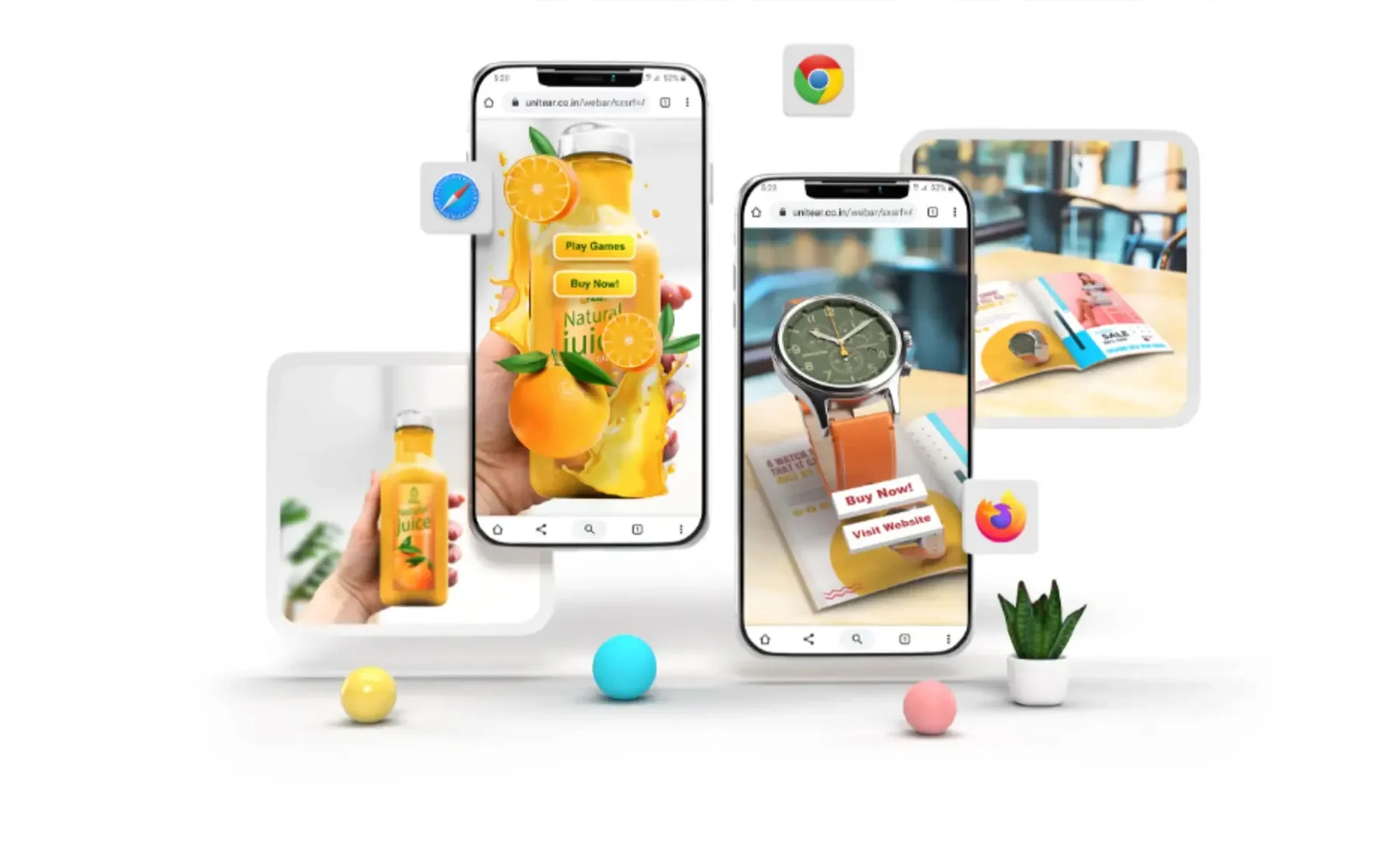
WebAR is a form of augmented reality that runs seamlessly through mobile web browsers. It is directly accessible from any mobile browser -- no app downloads required. With just a single link and a single tap, you can access any digital content in real time, straight from your browser.
Thanks to WebAR, you no longer need to develop a dedicated application to deliver an augmented reality experience. WebAR eliminates one of the biggest barriers to AR adoption: the requirement for users to download and install a separate AR application. This is where deeplinks become critically important -- a simple URL or QR code is all it takes to launch a full AR experience instantly in the user's browser, with zero friction.
With WebAR, you save on app development costs, CDN costs, and valuable time. Until recently, AR experiences were only possible through native apps installed on mobile devices. WebAR, as a browser-based augmented reality technology, provides the definitive solution to this problem.
The Power of Deeplinks and QR Codes
WebAR represents the complete augmented reality experience accessed through a web browser instead of an app. All you need is an internet connection and a smartphone. WebAR combines Augmented Reality and Virtual Reality technologies to innovatively showcase your products or services.
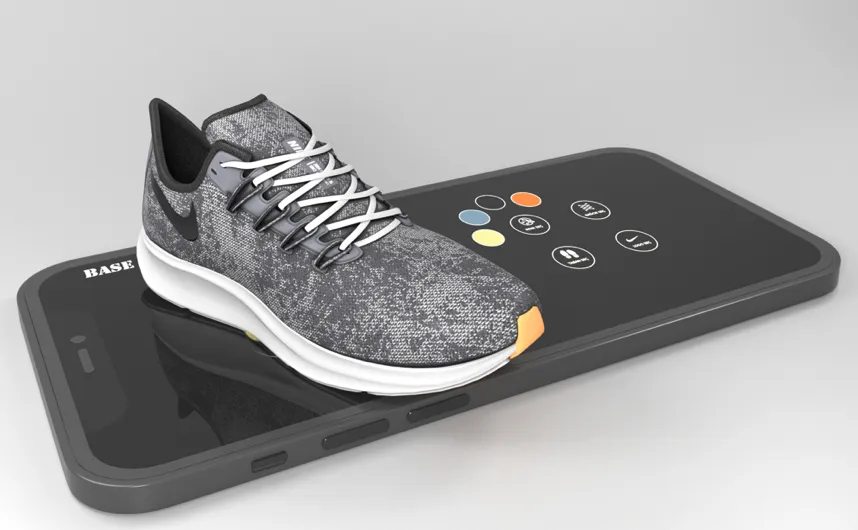
What makes WebAR truly powerful is its accessibility through deeplinks and QR codes. A deeplink can be embedded in any digital channel -- an email, a social media post, an SMS, or a product page -- and it takes the user directly to the AR experience in their browser. Similarly, a QR code printed on packaging, in a store display, or on a billboard provides instant access to an immersive 3D and AR product view. No app store visit, no download, no waiting. This frictionless, app-less experience is what makes WebAR a game-changer for e-commerce.
With WebAR, you can perform many of the functions that dedicated AR applications offer, and deliver an unforgettable experience to end users quickly and at high quality.
Augmented Reality: E-Commerce Use Cases
To explore this topic in greater depth, Google recently announced at its I/O conference that augmented reality models have been added to Google search results.
Google 3D Search and AR in Search Results
Although currently available for only select objects, it is clear that this will offer a significant user experience for SEO and e-commerce in the near future.
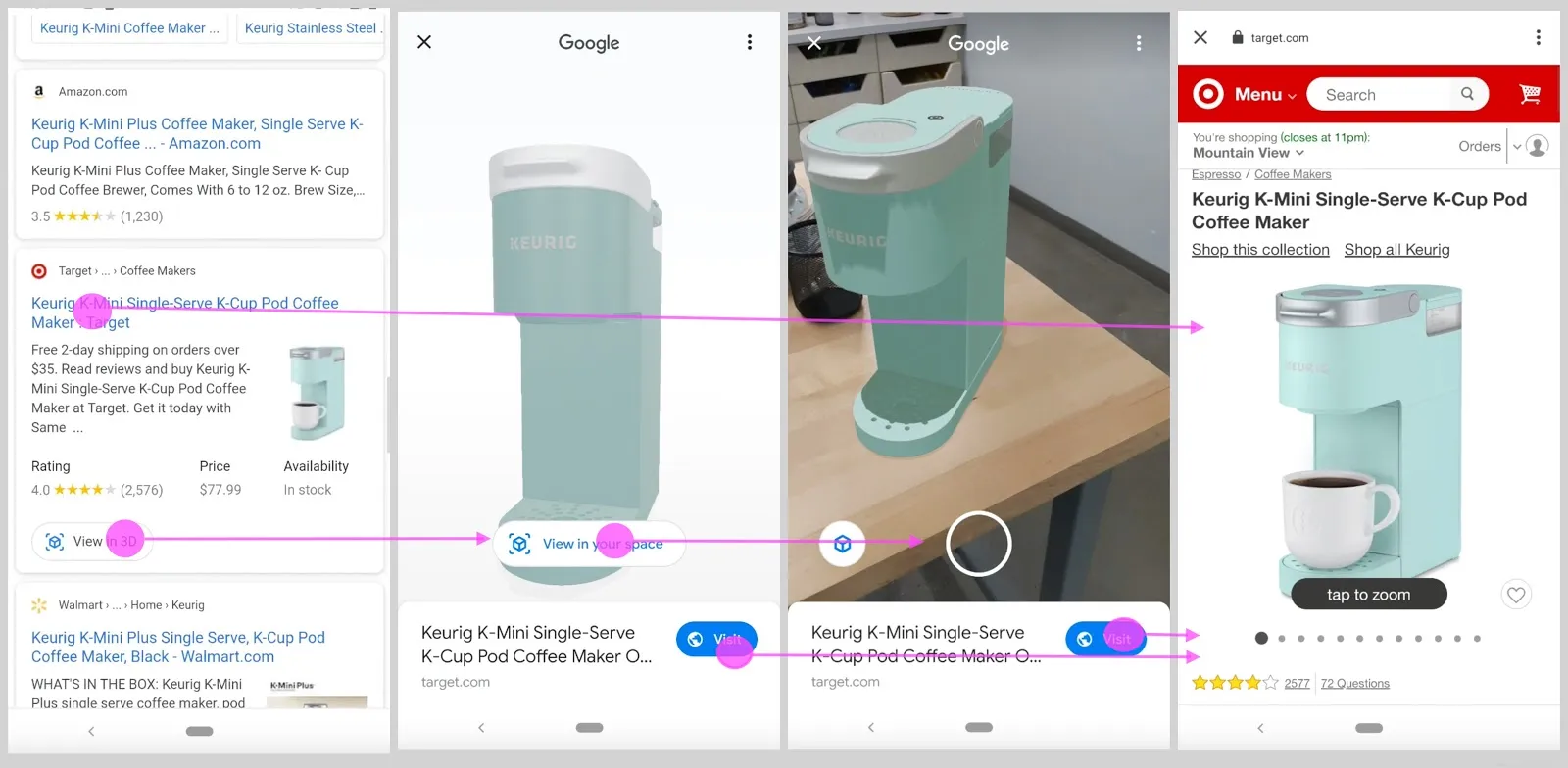
This means that when you search for a product you want to buy on your mobile device, the product will be presented in three dimensions on the Google results pages, and you can examine it as if it were right in front of you. Using a smartphone or computer, users who browse search results can view the 3D model and place it in their physical space using their phone's camera and surface detection capabilities. On desktop, only 3D viewing is available, while on mobile devices the full AR feature is also active.
In search results, new AR features that allow users to view and interact with 3D objects will use a combination of camera, computer vision, and AR (Augmented Reality) to place information and content into the user's physical environment. This is clearly an excellent solution for advertisers and organizations that want to accurately showcase their products to end users.
Marketing and Brand Experiences Through AR
On the other hand, augmented reality gives brands the opportunity to integrate the digital world with the real world in unexpected ways. At this point, marketers can move away from traditional advertising methods and embrace technology. As a result, this technology is frequently used by marketers today to promote new products.
Companies have developed numerous applications that offer virtual objects and manipulation-focused experiences to capture customer interest. For example, the latest automotive campaigns showcase full-size virtual vehicles in public spaces. Without the need for gloves or other controllers, users can view real-time spatial movements, open doors, fold seat backs, and use virtual buttons to rotate virtual model vehicles.
In fact, back in 2008, the renowned automobile company MINI published an augmented reality advertisement in various German automotive magazines. What appeared as a black-and-white area in the German magazine became a 3D holographic model of the Mini Cabrio through a webcam and the Mini website. Similarly, Volkswagen promoted its new Passat model in Germany through a digital brochure and newspaper advertising campaign. By scanning the print materials with smartphones, users could view the new Passat in their chosen color and wheel style through a video that showcased the vehicle's features -- even allowing a near "test drive" experience.
WebAR in Practice: Real-World E-Commerce
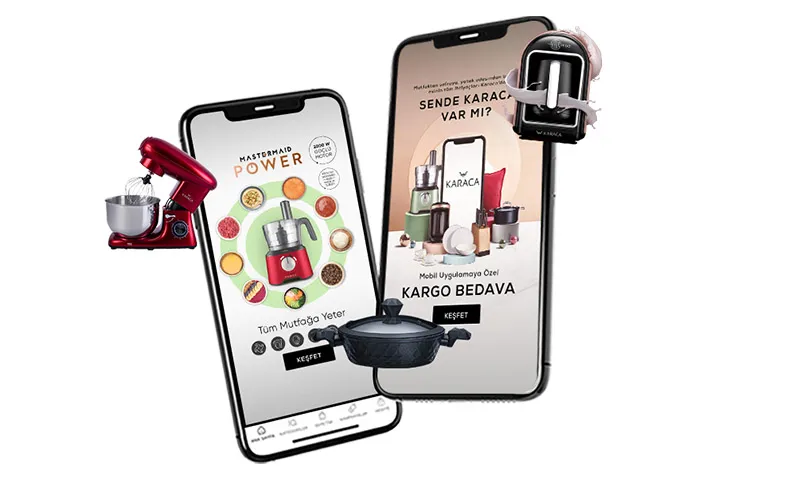
A great example of WebAR in action is Karaca (krc.com.tr), which effectively uses AR systems both on its website and in its mobile application. With thousands of products available in 3D and AR online, it demonstrates how WebAR can be deployed at scale in real e-commerce environments.
Key Advantages of WebAR
- No app development or download costs -- users access AR directly through their browser
- No CDN costs -- content is served via standard web infrastructure
- Browser-based -- works on any modern mobile browser
- Simplest and most user-friendly AR experience -- one tap to launch
- Easy access via deeplinks and QR codes -- embed in emails, ads, packaging, or social media
- Great for media and PR -- shareable, linkable, and instantly accessible
- Significant reduction in e-commerce return rates -- customers see products in their real space before buying
- Increased time spent on web pages -- interactive 3D and AR keeps users engaged longer
Conclusion
WebAR represents a fundamental shift in how consumers interact with products online. By removing the friction of app downloads and making AR accessible through simple deeplinks and QR codes, it opens the door to truly immersive e-commerce experiences for everyone. From Google's integration of 3D models in search results to brands deploying AR at scale on their websites, the future of online shopping is three-dimensional, interactive, and browser-based.
At BASE BROS, we are an AR technology company dedicated to making this technology accessible and experienceable for everyone, working alongside our most valued clients. With countless AR examples we have developed, we deliver a unique presentation experience to end users. Contact us for detailed information and to discuss your projects.